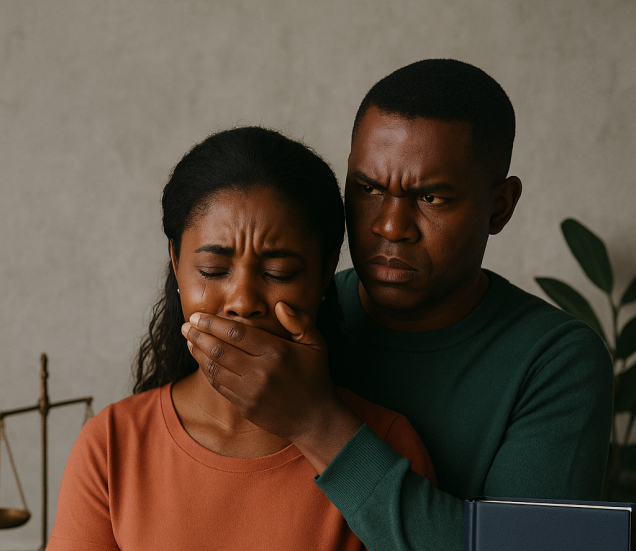
Violence Against Women (VAW) remains one of the most pervasive human rights violations worldwide, cutting across culture, class,
religion, and geography. From domestic abuse, child marriage, and female genital mutilation to online misogyny and technology-facilitated
violence, millions of women and girls continue to face threats to their safety, autonomy, and dignity.
Globally, the United Nations estimates that 1 in 3 women will experience physical or sexual violence in their lifetime, an alarming statistic
that demands sustained, strategic, and collective action.
Advocacy has emerged as one of the most powerful tools for disrupting harmful norms, influencing policy, shifting public consciousness, and
strengthening institutional accountability.
In Nigeria, as in many countries, the rise of civil society movements, women-led organisations, survivor networks, and digital activism has
illuminated the urgent need for systemic change
This Second Edition explores the evolving role of advocacy in combating VAW, with expanded insight into legal reform, digital mobilisation,
survivor-centred approaches, and global frameworks guiding national action.
1. Understanding Advocacy in the Context of VIOLENCE AGAINST WOMEN (VAW)
Advocacy refers to intentional actions taken to influence public policies, cultural attitudes, institutional behaviours, and societal norms.
In the context of VAW, advocacy aims to:
Raise awareness of the prevalence and consequences of violence
Demand justice, accountability, and protection for survivors
Challenge patriarchal norms and discriminatory practices
Strengthen laws, policies, and institutional responses
Mobilise communities towards a violence-free society
Amplify survivor voices and ensure their rights are upheld
Advocacy is not a single intervention, it is a continuous ecosystem involving individuals, organisations, governments, media, and global
bodies working together to dismantle gender-based oppression.
1. Understanding Advocacy in the Context of VIOLENCE AGAINST WOMEN (VAW)
Advocacy refers to intentional actions taken to influence public policies, cultural attitudes, institutional behaviours, and societal norms.
In the context of VAW, advocacy aims to:
Global advocacy has shaped powerful frameworks such as:
CEDAW (Convention on the Elimination of All Forms of Discrimination Against Women)
The Beijing Platform for Action
UN SDG 5: Gender Equality
The Istanbul Convention
Advocacy is not a single intervention, it is a continuous ecosystem involving individuals, organisations, governments, media, and global
bodies working together to dismantle gender-based oppression.
5. Cultural and Religious Abuse
This is a new terrain that may not be welcomed by many, but it can be likened to institutional abuse, but this form of abuse uses cultural or
religious beliefs to justify control or harm. For example, a Nigerian woman might be told that her suffering is “God’s will” or that enduring
abuse is her duty as a “good wife.” Such manipulation leverages deeply ingrained beliefs to silence victims. It is real and it should be
discussed.
Recognizing the Signs of Abuse
Identifying abuse, especially when it is subtle, requires awareness of specific red flags. Below are signs that women should watch for in
their relationships:
Constant Criticism or Humiliation: If a partner frequently insults or belittles a woman, whether in private or public, it is a sign of
emotional abuse. For example, a husband who mocks his wife’s cooking or appearance in front of family members is undermining her confidence.
Control and Isolation: Abusers often seek to control their partner’s movements, friendships, or access to resources. A Nigerian woman might
notice her husband forbids her from visiting friends, monitors her phone calls, or restricts her access to money.
Blame-Shifting and Gaslighting: If a woman is constantly blamed for her partner’s anger or made to feel she is “crazy” for questioning his
behavior, she may be experiencing psychological abuse.
Threats and Intimidation: Threats to harm the woman, her children, or her family are clear signs of abuse. Even subtle threats, like
threatening to send a wife back to her parents’ house, are manipulative tactics.
Unwanted Sexual Pressure: Any sexual act performed without consent, even within marriage, is abuse. A woman should feel safe to say no without
fear of retaliation.
Economic Control: If a partner controls all financial decisions or prevents a woman from earning her own income, it is a form of abuse aimed at
maintaining power.
The Impact of Abuse on Women
The consequences of abuse are profound, affecting every aspect of a woman’s life. Physically, women may suffer injuries, chronic pain, or
health issues from stress. Emotionally, abuse can lead to anxiety, depression, or post-traumatic stress disorder (PTSD). Socially, abused women
may become isolated, losing connections with family and friends. Economically, financial abuse can trap women in poverty, especially if they
lack access to resources or employment.
In Nigeria, the societal impact is compounded by stigma. Women who speak out about abuse often face blame or ostracism. For example, a woman
who leaves an abusive marriage may be labeled “stubborn” or “unsubmissive,” making it harder for her to seek support. Additionally, the lack
of robust legal protections and enforcement exacerbates the problem. While Nigeria’s Violence Against Persons Prohibition (VAPP) Act of 2015
criminalizes various forms of abuse, its implementation remains inconsistent, particularly in rural areas.
Steps to Take
Recognizing abuse is only the first step, taking action is crucial. Below are practical steps women can take to protect themselves and seek
help:
1. Educate Yourself
Knowledge is power. Women should learn about their rights under Nigerian law, including the VAPP Act, which protects against physical,
emotional, and sexual abuse. Organizations like the International Federation of Women Lawyers (FIDA) Nigeria, National Human Rights Commission
offer resources and legal advice.
2. Build a Support Network
Isolation is a key tactic of abusers. Women should maintain connections with trusted family members, friends, or community leaders who can
provide emotional or practical support. Religious institutions, such as churches or mosques, can also offer safe spaces, though women should
be cautious of advice that reinforces harmful cultural norms.
3. Document the Abuse
Keeping a record of abusive incidents such as dates, times, and descriptions can be useful for legal action. Women can also take photos of
physical injuries or save threatening messages as evidence. There was a widow who was able to provide all the details of the abuse she
suffered from her in-laws and every detail of her husband’s property that was seized by the in-laws in court. She won her case simply by
helping the court reach a reasonable verdict by providing these details. It is usually a very emotional period, but a victim must summon
up the courage to document her abuse to get justice.
4. Seek Professional Help
NGOs like Women’s Aid Collective (WACOL) and Project Alert on Violence Against Women provide counseling, legal aid, and shelter for abused
women. Hotlines, such as the Lagos State Domestic and Sexual Violence Response Team (DSVRT) at 08137960048, offer immediate assistance.
5. Plan for Safety
A safety plan includes identifying a safe place to go (e.g., a friend’s house or shelter), keeping a phone in a strategic place within the
ouse to make emergency calls in case of violence, packing an emergency bag with essentials like clothes and documents, and contacting
authorities or NGOs for support.
6. Challenge Cultural Narratives
Women can advocate for themselves by questioning harmful cultural or religious justifications for abuse. Engaging in community dialogues
or joining women’s groups can help shift societal attitudes over time.
Conclusion
Recognizing the signs of abuse is a vital step toward empowering Nigerian women and globally to reclaim their dignity and safety. In a
society where cultural norms and economic realities often silence victims, awareness and education are powerful tools. By understanding
the various forms of abuse, physical, emotional, financial, sexual, and cultural, women can break free from the cycle of violence. Support
from NGOs, legal protections, and community allies can provide a lifeline for those in need.
As Nigeria continues to evolve, so too must its approach to gender-based violence. Empowering women to identify hidden violence is not just
about individual liberation; it is about building a society where every woman can live free from fear and oppression. For Nigerian women
reading this, know that you are not alone, and help is available. Your voice matters, and your strength can inspire change.
This article is a call to action, not only for women to recognize and resist abuse but for all Nigerians to stand against violence and
champion a future of equality and respect.